The Best Ski Goggles for Flat Light: What Actually Helps You See the Snow
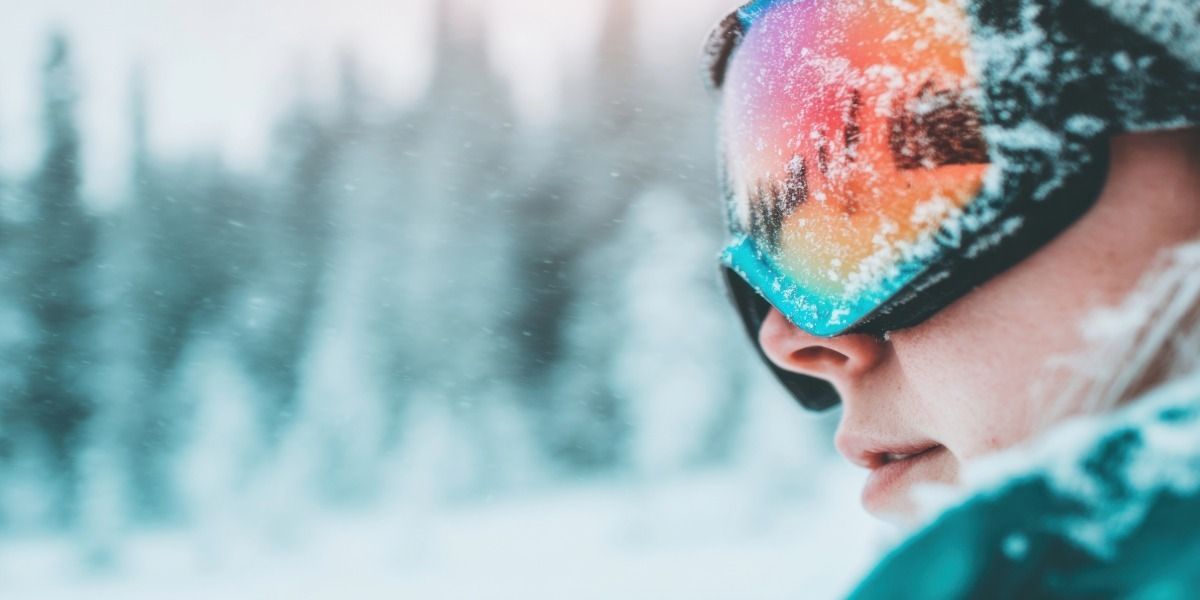
Flat light can turn a perfectly good ski run into one giant sheet of white. The bumps disappear. The pitch becomes hard to read. That innocent-looking patch ahead may be soft snow, scraped-off hardpack, or a surprise trough waiting to rearrange your afternoon.
The right ski goggle cannot create shadows that are not there, but it can help your eyes pick up more contrast, texture, and definition in the snow. The trick is choosing the right lens, not simply the darkest, most expensive, or most mirrored one on the wall.
Here is what really makes a good flat-light ski goggle, plus our favorite options at outdoor DIVAS.
What Is Flat Light?
Flat light happens when clouds, fog, or falling snow scatter the available light so evenly that the shadows on the snow nearly disappear. Without those shadows, your eyes lose many of the visual cues they use to judge depth and recognize changes in terrain. That is why a run you know well can suddenly feel unfamiliar. You are not imagining it. The contours really are harder to see. A good flat-light lens helps in two ways: it lets enough light reach your eyes and filters color in a way that makes subtle changes in the snow easier to distinguish.
Start With VLT
VLT stands for visible light transmission, or the percentage of available light that passes through the lens.
-
A low-VLT lens lets in less light and is intended for bright, sunny conditions.
-
A high-VLT lens lets in more light and is better for cloudy, snowy, foggy, or very low-light conditions.
For true flat light, look for a lens with a relatively high VLT. Roughly 40% or higher is a useful starting point for overcast conditions, while very dark storm days may call for 60%, 70%, or even more.
The exact number is not the whole story, but a lens that only transmits 5% to 20% of visible light is simply too dark to be your best storm-day choice.
Lens Color and Contrast Matter Too
Letting in more light is only part of the equation. A completely clear lens may be bright, but it does little to improve contrast. Rose, pink, amber, copper, and yellow base tints are commonly used in low-light lenses because they alter specific wavelengths of light and help the eye separate the contours of the snow.
Modern technologies such as Giro VIVID with Optics by ZEISS and Oakley Prizm Snow are more sophisticated versions of the same idea. They manage color and contrast to make changes in snow texture easier to recognize. In other words, the best flat-light lens is not necessarily the lens with the highest VLT. You want enough transmitted light plus a contrast-enhancing tint.
Are Photochromic Goggles Good for Flat Light?
Yes, with one important qualification: check the lens range.
Photochromic lenses automatically become lighter or darker as light conditions change. That makes them especially useful in the mountains, where a run can move from an open, sunny face into shaded trees and back again. A photochromic lens that reaches Category 0 or Category 1 and has a high light-transmission ceiling can be an excellent flat-light choice. A Category 2–4 photochromic lens remains relatively dark even at its lightest, so it is better suited to bright and high-glare conditions.